
- December 21, 2024
- Posted by: Debobrota Kumar Sarker
- Category: Climate Finance
Building a Climate-Resilient Bangladesh Through Sustainable Finance: A Case Study Perspective
Today, Bangladesh has become a living laboratory for climate change adaptation and sustainable finance innovation globally. Although it is one of the most climate-change vulnerable countries globally, Bangladesh is showing the way on how financial systems, policies, and community-led approaches could collaborate to create long-term resilience. Sustainable finance is changing the environmental and economic landscape of Bangladesh through the Bangladesh Bank and collaborative efforts between ministries of governments, development partners, and private sector innovators.
This case study will also offer an in-depth examination of how sustainable finance is operationalized by a country like Bangladesh to enhance resilience against climate change, generating important learnings that can be applied to an emergent economy.
Background: Climate Vulnerability and the Need for Financial Innovation
In Bangladesh, climate change poses serious risks:
- Frequent floods and bank erosion
- Intensifying
- Increased salinity in coastal areas
- Sea level rise
- All types of threats for agriculture, water security, urban infrastructure
Such risks call for more than a disaster response but need a financial approach. Bangladesh was aware of this from the early stages and thus became amongst the first developing nations to adopt sustainability within its central banking policies.
Policy Foundation: Bangladesh Bank’s Sustainable Finance Ecosystem
One of the major milestones was reached when the Bangladesh Bank (BB) introduced various revolutionary frameworks, namely:
Critical Policies to Achieve Climate Resilience
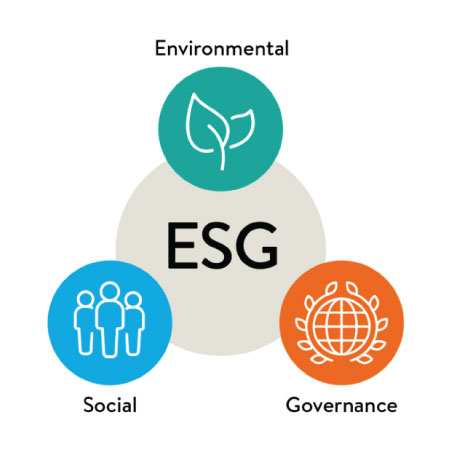
- Sustainable Finance Policy (2020): Combines principles of green finance, sustainable finance, and ESG factors within loan portfolios.
- ESRM Guidelines (2017): Requires environmental and social due diligence for all projects.
- Green Refinance Schemes: Encourages solar systems, biogas, effluent treatment plants, energy efficiency, and cleaner production.
- Climate Risk Management Guidelines: Discusses stress testing and climate scenario analysis for banks.
These two policies combined made Bangladesh a forerunner of green monetary policies in the Global South.
Case Study 1: Solar Irrigation Pumps: Reducing Emissions & Enhancing Productivity
One of the most frequently quoted success stories from Bangladesh is the development of solar-powered irrigation pumps that can decrease the need for diesel.
Impact Snapshot
- More than 2,000+ solar-powered irrigation pump installations assisted with refinancing
- Annual diesel conservation of millions of liters, hence saving costs incurred by farmers.
- Carbon release cut significantly.
- Increased agricultural productivity in regions that are climate change
This case highlights how target finance promotes a low-carbon transition.
Case Study 3: Climate-Smart Agriculture and Smallholder Adaptation
Financial institutions helped farmers by providing climate-resilient options:
- Drought-proof seed strains
- Drip irrigation
- Organic
- Microcredit for adaptation technologies
Due to BB’s refinancing, micro-finance institutions supported communities who faced threats of climate change to remain resilient to the impacts of such change. Crop damage and risk of livelihood loss are now lower in some of the hottest.
Case Study 2: RMG Sector Greening: The Global Leader in Green Garment Factories
Indexing world’s largest number of LEED-certified green factories, it is a green nation, mostly financed through green transformation loans.
Why This Matters
- Textile and RMG are high emission, high water
- Banks supported ETPs, Energy Saving Technologies, Roof Top Solar, and Water Recycling.
- Sustainable factories are now an attractive proposition to top buyers, thus increasing the competitiveness
This is just one illustration that shows that sustainable finance is crucial in ensuring that the environment is protected and also that export sectors are strengthened.
Case Study 4: Coastal Protection and Salinity Resilience
Banks have funded such sustainable infrastructure as:
- Eco-friendly embankment reinforcement
- Salinity-resistant water systems
- Cyclone-resilient housing
Such investments, based on ESRM requirements, show how resilience to climate change can find its place in financial investments.
ESG Integration: Strengthening Governance and Risk Systems
Bangladesh maintains progress on climate resilience enhancement through improved governance:
- Banks are compelled to disclose their exposures to
- Board-level sustainability committees
- Integration of climate risks into credit decisions
- Adoption of sustainability ratings
There has been enhanced transparency through the use of ESG reporting.
Lessons for Global Emerging Economies
Bangladesh’s experience offers several insights:
- Policy leadership promotes climate finance.
The policies are fueled by actions of a central bank that bring about adoption in the - Financing climate-smart solutions can lower economic losses.
Adaptation is less costly than disaster recovery. - Green manufacturing increases global competitiveness.
Green clothes boosted the reputation of Bangladesh in the global value chains. - Community-level adaptation finance creates an immediate effect.
Micro-climate financing has the power to bring about a livelihood - Stewards of the Future – Resil
As a result of better governance, the resilience level
The Road Ahead: Scaling Sustainable Finance for Vision 2041
To emerge as a high-income and climate-resilient country, Bangladesh needs to invest more in:
- Renewable energy and energy efficiency
- Blue economy & coastal resilience
- Sustainable urbanization
- Advanced climate risk analytics
- Sustainable transportation
- Circular economy for industrial waste
This upcoming decade will be a test of whether a robust sustainable finance system can be built from billions of dollars to a game-changing trillion-dollar sector for a country like Bangladesh.
Conclusion
The road to climate resilience through sustainable finance by Bangladesh is not a local, but a global, success story. Bangladesh has shown that even countries that are less affluent and less endowed with resources can turn climate risk into an opportunity through smart regulation, smart investment, and smart community engagement.
For researchers, policymakers, and ESG professionals alike, the experience of Bangladesh provides an important lesson:
Where finance and sustainability meet, a strong future can be created.
Contact us at the DKS Capital Advisory office nearest to you or submit a business inquiry online.