
- December 21, 2025
- Posted by: Debobrota Kumar Sarker
- Category: Climate Finance
How Far Bangladesh Has Progressed With Climate Finance and What Hindrances Remain
Bangladesh is one of the most proactive climate-vulnerable nations in mobilizing climate finance. Over the last decade, it has developed a structured ecosystem for financing climate adaptation, green growth, and resilience—often touted as exemplary for other nations in the developing world. But despite such progress, the country still faces considerable bottlenecks that keep the scale, speed, and effectiveness of climate finance below par.
How Far Bangladesh Has Progressed With Climate Finance
1. Strong Policy and Regulatory Framework
Bangladesh is ahead of many developing nations due to comprehensive regulations:
- Bangladesh Climate Change Strategy and Action Plan [BCCSAP]
- Bangladesh Bank Sustainable Finance Policy 2020
- ESRM Guidelines 2017
- Green Refinance Schemes
- National Adaptation Plan 2023–2050
This regulatory foundation provides clarity and direction for banks, investors, and development partners.
That economic behavior is everywhere, constituting a unifying force running through all of human history.
2. Increasing Domestic Climate Finance Flow
Bangladesh has one of the biggest domestically funded climate programs among developing countries:
- Bangladesh Climate Change Trust Fund (BCCTF) – entirely financed from national budget (~US$ 450+ million allocated since inception).
- Line ministries now tag 8%–10% of their budgets for climate activities.
- Expansion of green loans for:
- solar irrigation
- rooftop solar
- ETP installations
- cleaner production
- climate-smart agriculture
3. Increased Mobilization of International Climate Finance
Bangladesh receives climate finance from:
- Green Climate Fund (GCF)
- World Bank, ADB, IDA, JICA
- UN agencies
- Global Environment Facility (GEF)
These projects fund climate-resilient infrastructure, fisheries, agriculture, and disaster preparedness.
4. Integration of Green Banking and Sustainable Finance
Banks have recently become one of the main drivers of climate finance:
- Compulsory targets on green finance
- Climate risk stress-testing
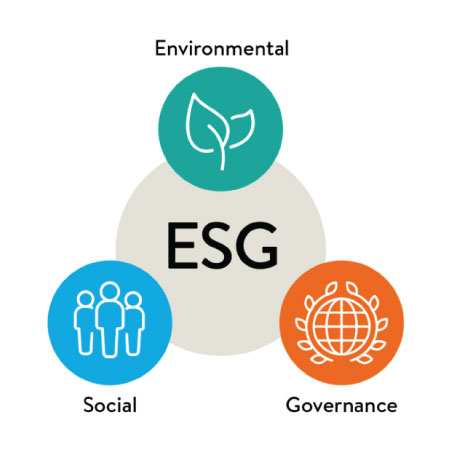
- ESG reporting and sustainability ratings
- Refinance Schemes for Adaptation and Mitigation Projects
Bangladesh has been labeled as one of the pioneering proponents of green banking in South Asia.
5. Global Recognition
- World’s highest number of green garment factories
- Well-regarded for community-based adaptation
- Future leader in climate-resilient development
These achievements make Bangladesh a practical global case study.
Key Bottlenecks Restricting Bangladesh’s Climate Finance Potential
Despite the progress, Bangladesh confronts structural challenges:
- Lack of Scale in Financing
Huge needs exist in climate finance:
- An estimated US$ 230 billion is needed by 2050 for climate-resilient infrastructure.
- Yet current mobilization remains well below what is required.
- The flow of climate finance in Bangladesh can still not match the scale of climate threats.
2. Limited Access to International Funds
Barriers include:
- Most complex application processes
- Most challenging accreditation requirements
- Limited readiness capacity for large-scale proposal development
- Competition with other climate-vulnerable nations
This reduces the pace at which money flows around the world.
3. Weak Private Sector Participation
This is mainly because private investments in climate projects remain very low due to:
- High perceived risk
- Lack of credit guarantees
- Limited awareness of green investment
- Slow adoption of the ESG standards outside banking
The contribution by the private sector needs to increase a great deal.
4. Data Gaps & Weak Climate Risk Analytics
Challenges include:
- Fragmented climate data across ministries
- Limited geospatial risk mapping
- Poor integration of climate risk in financial modelling
- Lack of standardized climate reporting for companies
Better data is necessary to empower large-scale climate investment decisions.
5. Bottlenecks in Implementation
Even when funds are available, certain concerns are related to implementing agencies:
- Low technical capacity
- Delays in procurement and approvals
Complications associated with the acquisition of land. - Limited monitoring and evaluation frameworks
This reduces project efficiency and long-term impact.
6. Inadequate Adaptation of Financial Inclusion at the Local Level
Its financial products still exclude a lot of vulnerable communities from:
- Micro-insurance
- Climate-resilient housing loans
- Adaptation technologies
- Disaster recovery mechanisms
Grassroots climate finance is still in its infancy.
7. Limited Coordination Among Government, Banks & Development Partners
Climate finance is too often siloed:
- Agencies work singly and independently of each other.
- Banks are void of sector guidance on climate priorities
- Donor-funded projects run parallel systems
Gaps in coordination decrease synergy and scalability.
🌱 Conclusion: Bangladesh Moving in the Right Direction but requires scaling up on a transformative scale.
Bangladesh’s progress in developing mechanisms of climate finance has been remarkable, especially when compared to most developing countries. But the scale of climate risk demands far greater ambition; more private sector mobilization, more robust climate governance, better data systems, and stronger global financing partnerships.
Bangladesh has proven that climate finance can create resilience. The next challenge is the scaling up of these successes from hundreds of projects to nationwide transformation.

Contact us at the DKS Capital Advisory office nearest to you or submit a business inquiry online.